One of the biggest adjustments for new freelancers is learning to manage quarterly estimated taxes. Unlike traditional employees who have taxes automatically withheld from their paychecks, freelancers are responsible for paying their taxes throughout the year. This guide will help you understand, calculate, and pay your quarterly estimated taxes confidently.
What Are Quarterly Estimated Taxes?
Quarterly estimated taxes are payments you make to the IRS (and often your state) four times a year to cover your income tax and self-employment tax obligations. The U.S. tax system operates on a "pay-as-you-go" basis, meaning taxes should be paid as income is earned, not just at the end of the year.
Who Needs to Pay Quarterly Taxes?
You generally need to make quarterly estimated tax payments if:
- You expect to owe $1,000 or more in federal taxes for the year
- Your withholding and credits will be less than the smaller of:
- 90% of the tax shown on your current year return, OR
- 100% of the tax shown on your prior year return (110% if your AGI exceeded $150,000)
Common Situations Requiring Quarterly Payments
- Freelancers and independent contractors
- Self-employed business owners
- Gig economy workers (rideshare, delivery, etc.)
- Anyone with significant investment income
- Landlords with rental income
The Four Quarterly Deadlines
The IRS divides the year into four payment periods, but they don't align with calendar quarters:
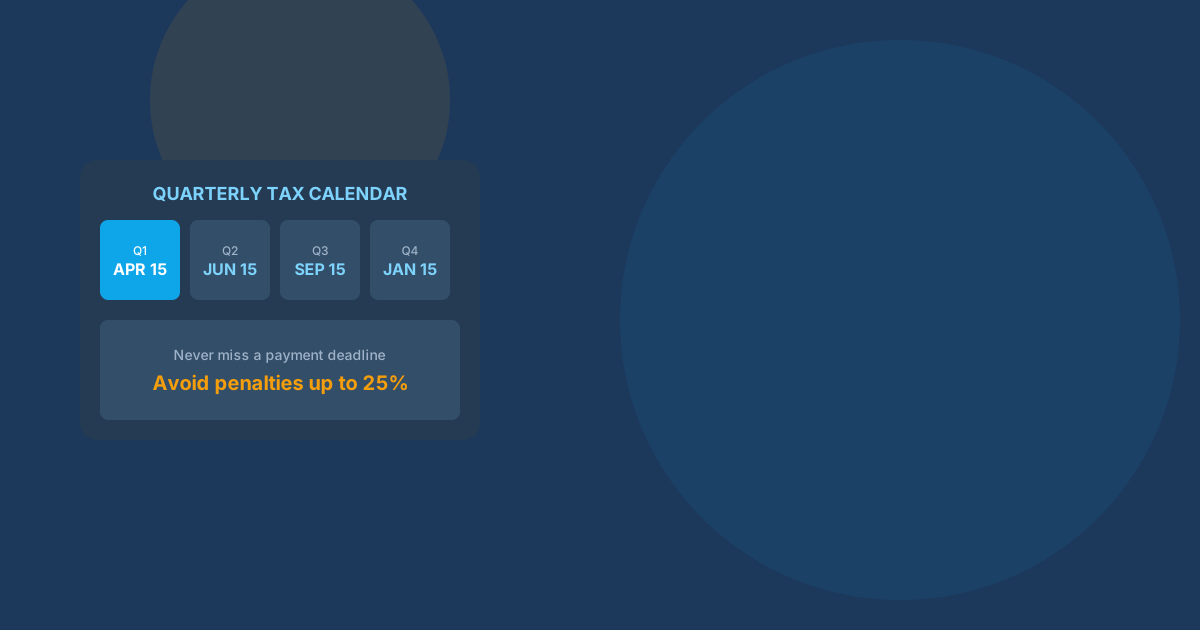
| Payment Period | Income Earned | Due Date | |----------------|---------------|----------| | 1st Quarter | January 1 - March 31 | April 15 | | 2nd Quarter | April 1 - May 31 | June 15 | | 3rd Quarter | June 1 - August 31 | September 15 | | 4th Quarter | September 1 - December 31 | January 15 (following year) |
Note: If a due date falls on a weekend or holiday, the deadline moves to the next business day.
How to Calculate Your Quarterly Payments
There are several methods to calculate your quarterly estimated tax payments. Choose the one that works best for your situation.
Method 1: Prior Year Safe Harbor
The simplest method is to pay 100% of what you owed last year, divided into four equal payments. This is called the "safe harbor" method because it protects you from underpayment penalties, even if you earn significantly more this year.
Example:
- Last year's total tax: $12,000
- Quarterly payment: $12,000 / 4 = $3,000
Important: If your adjusted gross income (AGI) was over $150,000 last year ($75,000 if married filing separately), you must pay 110% of last year's tax to qualify for safe harbor.
Method 2: Current Year Estimate
If your income varies significantly from year to year, you might prefer to estimate based on your current year's expected income:
- Estimate your total income for the year
- Subtract expected deductions
- Calculate your tax liability (income tax + self-employment tax)
- Subtract any expected withholding or credits
- Divide by 4
Method 3: Annualized Income Method
If your income is irregular throughout the year, you can use the annualized income installment method. This allows you to make smaller payments in quarters when you earn less and larger payments when you earn more. Use Form 2210, Schedule AI to calculate.
Calculating Self-Employment Tax
Don't forget that quarterly payments should cover both income tax AND self-employment tax. Here's how to estimate your SE tax:
- Calculate net self-employment income: Gross income - business deductions
- Multiply by 92.35%: This gives you the SE tax base
- Calculate SE tax: SE tax base x 15.3% (for income up to $168,600 in 2024)
Example:
- Net self-employment income: $50,000
- SE tax base: $50,000 x 0.9235 = $46,175
- Self-employment tax: $46,175 x 0.153 = $7,065
Step-by-Step Quarterly Tax Calculation
Let's walk through a complete example for a freelance graphic designer:
Anna's Situation:
- Expected gross income: $80,000
- Business expenses: $15,000
- Standard deduction: $14,600
- Filing status: Single
- Last year's tax: $10,000
Calculation:
1. Net Self-Employment Income $80,000 - $15,000 = $65,000
2. Self-Employment Tax
- SE tax base: $65,000 x 0.9235 = $60,028
- SE tax: $60,028 x 0.153 = $9,184
- Deductible half of SE tax: $4,592
3. Adjusted Gross Income $65,000 - $4,592 = $60,408
4. Taxable Income $60,408 - $14,600 (standard deduction) = $45,808
5. Federal Income Tax Using 2024 tax brackets for single filers:
- $11,600 x 10% = $1,160
- $34,208 x 12% = $4,105
- Total income tax: $5,265
6. Total Tax Liability $5,265 (income tax) + $9,184 (SE tax) = $14,449
7. Quarterly Payment $14,449 / 4 = $3,612 per quarter
How to Make Quarterly Payments
Online Payment Options
1. IRS Direct Pay (Free)
- Go to irs.gov/payments
- Select "Make a Payment"
- Choose "Estimated Tax" and the correct tax year
- Enter your bank account information
2. Electronic Federal Tax Payment System (EFTPS)
- Requires enrollment at eftps.gov
- Good for scheduling recurring payments
- Provides payment confirmation numbers
3. Credit or Debit Card
- Available through approved processors
- Convenience fees apply (1.85-1.98% for credit cards)
Payment by Mail
Send a check or money order with Form 1040-ES to the IRS. The address depends on your state - check the 1040-ES instructions for the correct address.
State Estimated Taxes
Don't forget about state taxes! Most states with income tax also require quarterly estimated payments. Check your state's department of revenue website for forms and deadlines.
Avoiding Underpayment Penalties
The IRS charges penalties for underpaying estimated taxes. Here's how to avoid them:
Safe Harbor Rules
You'll avoid penalties if you pay at least:
- 90% of your current year tax liability, OR
- 100% of your prior year tax liability (110% if AGI > $150,000)
Exception for Low Balances
No penalty applies if you owe less than $1,000 at tax time or if your withholding/payments were at least 90% of your tax due.
How Penalties Are Calculated
The underpayment penalty is calculated like interest, using the federal short-term rate plus 3 percentage points, applied to each underpaid quarterly installment from its due date until paid.
Managing Irregular Income
Freelance income often varies month to month. Here are strategies to manage your quarterly payments:
Strategy 1: Percentage Set-Aside
Set aside a fixed percentage of every payment you receive:
- 25-30% is a good starting point for most freelancers
- Keep this money in a separate savings account
- Don't touch it except for tax payments
Strategy 2: Adjust Throughout the Year
If your income changes significantly, you can adjust your quarterly payments. Pay more in quarters when you earn more, less when you earn less.
Strategy 3: Use the Annualized Method
If your income is highly seasonal, the annualized income installment method (Form 2210, Schedule AI) can help you match payments to income more precisely.
Common Quarterly Tax Mistakes
Mistake 1: Forgetting State Taxes
Federal taxes are only part of the picture. Make sure you're also making state estimated tax payments if required.
Mistake 2: Not Starting Early Enough
Many new freelancers wait until their first full year to start paying quarterly taxes, then face a large tax bill and penalties. Start making payments in your first year of freelancing.
Mistake 3: Underestimating Self-Employment Tax
The 15.3% self-employment tax is in addition to your regular income tax. Many freelancers are surprised by this extra burden.
Mistake 4: Not Keeping Records
Document your estimated tax payments carefully. Keep records of:
- Payment dates
- Payment amounts
- Confirmation numbers
- Bank statements showing debits
Mistake 5: Paying Too Little to State
State tax rates vary widely. Don't assume your state takes a small percentage - some states have rates over 10%.
Tools and Resources
IRS Resources
- Form 1040-ES: Estimated Tax for Individuals
- Publication 505: Tax Withholding and Estimated Tax
- Tax Withholding Estimator: irs.gov/W4app
Using LightTaxes
LightTaxes simplifies quarterly tax management:
- Real-time Tax Estimates: See your estimated tax liability as you earn
- Payment Reminders: Never miss a quarterly deadline
- Income Tracking: Automatically track freelance income
- Deduction Optimization: Maximize deductions to reduce your tax burden
- Payment Calculator: Calculate exactly how much to pay each quarter
Creating a Quarterly Tax System
Here's a simple system to stay on top of your quarterly taxes:
1. Set Up a Dedicated Tax Account
Open a separate savings account just for taxes. This keeps your tax money separate from your operating funds.
2. Automate Your Set-Aside
Set up automatic transfers from your checking account to your tax account. Transfer a percentage of each payment you receive.
3. Review Quarterly
Before each quarterly due date:
- Review your income for the period
- Calculate any additional deductions
- Adjust your payment if needed
4. Make Payments on Time
Set calendar reminders for:
- 1 week before due date (to calculate payment)
- 3 days before due date (to initiate payment)
- Due date (to verify payment processed)
5. Keep Records
Create a simple spreadsheet tracking:
- Quarterly income
- Estimated deductions
- Payments made
- Running total
Planning Ahead
End-of-Year Strategies
As the year ends, you have opportunities to adjust your tax situation:
- Accelerate Deductions: Prepay business expenses or make equipment purchases
- Defer Income: If possible, push December invoices to January
- Maximize Retirement Contributions: SEP IRA contributions can be made until your filing deadline
Building a Tax Reserve
A good goal is to maintain a tax reserve equal to one quarter's estimated payment. This provides a buffer for unexpected income increases or forgotten expenses.
When to Get Professional Help
Consider working with a tax professional if:
- Your income exceeds $100,000
- You have multiple income sources
- You're considering entity changes (LLC, S-Corp)
- You've received IRS notices
- Your situation is complex (international income, investments, etc.)
Summary: Quarterly Tax Checklist
Use this checklist to stay compliant:
- [ ] Calculate your estimated annual income
- [ ] Determine your estimated deductions
- [ ] Calculate income tax + self-employment tax
- [ ] Divide by 4 for quarterly payments
- [ ] Set up a separate tax savings account
- [ ] Schedule automatic set-asides (25-30% of income)
- [ ] Mark quarterly due dates in your calendar
- [ ] Make payments on time via IRS Direct Pay or EFTPS
- [ ] Keep records of all payments
- [ ] Review and adjust estimates each quarter
Quarterly estimated taxes don't have to be overwhelming. With the right systems in place, you can manage your tax obligations confidently and avoid surprises at tax time. Start today by setting up your tax savings account and calculating your first quarterly payment.

Jennifer Walsh
LightTaxes Tax Expert
Jennifer Walsh is a CPA and enrolled agent who has spent 15 years helping self-employed professionals manage their tax obligations. She is passionate about making complex tax concepts accessible to everyone.